IMG-20250513-WA0001

Congratulatory message to Hon. Dr. Maureen Ekhoragbon

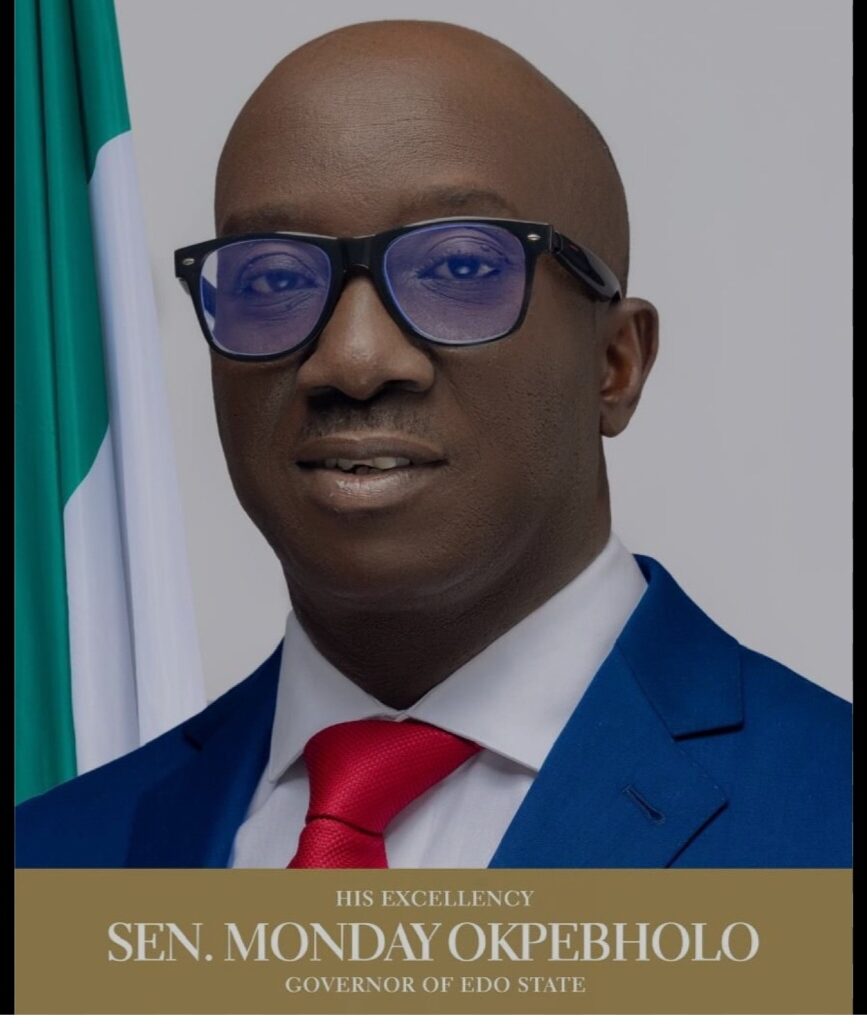
The Office of the Edo State Honourable Attorney General and Commissioner for Justice has extended warm congratulations to Dr. Maureen Ekhoragbon on her appointment as Chairman of the Edo State Board for Technical Education by His Excellency, Governor Monday Okpebholo.

In his congratulatory message ,the HAG commended Dr. Ekhoragbon for her resourcefulness and commitment to education, believing her wealth of experience will be invaluable to the board. He congratulates her heartily and wished her well in her new position.

Dr Osagie also charged Ekhoragbon to work in line with Governor Okpebholo’s vision of repositioning Technical Education, emphasizing the importance of collective effort with relevant stakeholders to achieving the desired results

He expressed optimism that Dr. Ekhoragbon’s leadership would bring to bear significant benefits while looking forward to her contributions to the growth and development of the board.

Clementina Agweda
Public Relations Officer
Office of the Attorney General

IMG-20250513-WA0000

The Edo State Attorney General’s Office extends warm congratulations to Hon. Joseph Ugheoke on his appointment as Executive Director of the South-South Development Commission.

The Honourable Attorney General and Commissioner for Justice, Dr. Samson Osagie has felicitated with Hon. Joseph Ugheoke on his appointment. as ED, South South Development Comission

In a statement, Dr Osagie expressed satisfaction with the appointment and thanked President Bola Tinubu for entrusting Hon. Ugheoke with this critical role.

The HAG noted that Hon. Ugheoke’s vast experience as a former legislator, Local Government Council Chairman, and Commissioner in Edo State would be invaluable in his new position. He urged him to leverage this experience to excel in his new responsibility.

While expressing satisfaction that the appointment was well deserved,the Attorney General expressed confidence in Hon.Ugheoke ability to deliver in his assigned duties and prayed that God would grant him the wisdom and strength to function effectively.

Clementina Agweda
Public Relations Officer,Office of the Attorney General.

Congratulatory Message from  Office of the Edo HAG to Hon. Chief Billy Osawaru on his Appointment as Chairman, House Committee on Cooperation and African Integration

The Honourable Attorney General and Commissioner for Justice, Edo State Dr. Samson Osagie has congratulated Hon. Chief Billy Osawaru, member representing Orhionmwon/Uhunmwode Federal Constituency, on his appointment by the Speaker of the House of Representatives as Chairman Committee  on Cooperation and Integration.

The HAG described Chief Osawaru as an effective and efficient lawmaker who has earned the appointment through dedication, hard work, and  commitment to duties.

Dr. Osagie congratulated him on the well-deserved appointment and thanked the speaker for recognizing his capacity to carry out the mandate of the  committee.

He further  commended the lawmaker for his effective representation of the people of Orhionmwon/Uhunmwode Federal Constituency and prayed for God’s guidance and success in his new assignment.

Clementina Agweda

Public Relations Officer, Office of the Attorney General.

The Edo State Attorney General’s Office extends warm congratulations to Hon. Joseph Ugheoke on his appointment as Executive Director of the South-South Development Commission

The Honourable Attorney General and Commissioner for Justice, Dr. Samson Osagie has felicitated with Hon. Joseph Ugheoke on his  appointment. as ED, South South Development Comission 

In a statement, Dr Osagie expressed satisfaction with the appointment and thanked President Bola Tinubu for entrusting Hon. Ugheoke with this critical role.

The HAG noted that Hon. Ugheoke’s vast experience as a former legislator, Local Government Council Chairman, and Commissioner in Edo State would be invaluable in his new position. He urged him to leverage this experience to excel in his new responsibility.

While expressing satisfaction that the appointment was well deserved,the Attorney General  expressed confidence in Hon.Ugheoke ability to deliver in his assigned duties and prayed that God would grant him the wisdom and strength to function effectively.

Clementina Agweda

Public Relations Officer,Office of the Attorney General.

The Honourable Attorney General and Commissioner for Justice, Edo State, Dr. Samson Osagie, commends Edo workers for their hardwork and dedication on the Occasion of Workers’ Day

The Edo State Attorney General and Commissioner for Justice, Dr. Samson Osagie has sent his goodwill message to Edo workers, appreciating their hard work and immense contribution to ensuring that Governor Monday Okpebholo’s vision of building a new Edo State is achieved. In a statement, the Attorney General commended the tireless efforts of all Edo workers in various sectors that have contributed significantly to the progress and development of the state. While acknowledging the crucial role workers play in building the economy, providing essential services, and shaping society, Dr. Osagie noted that their contributions are invaluable and expressed delight in recognizing their numerous achievements.

He also appreciated workers’ constant efforts in joining the Governor to ensure that Edo is repositioned in every aspect, noting them as laudable.

He reaffirmed that the Ministry of Justice team, under his leadership, remains committed to upholding justice, protecting rights, and promoting the rule of law and will continually strive to ensure that the legal system serves the needs of all Edo State citizens, pledging the Ministry’s dedication to working with all stakeholders to achieve this goal.

He further wished all workers a happy Workers’ Day and prayed that the celebration would inspire continued excellence, fairness, and prosperity for all, as he enjoined all stakeholders to continually work together to ensure a peaceful and progressive Edo State.

Clementina Agweda
Public Relations Officer,
Office of the Attorney General

images

Guilty of Being Nigerian in Ghana

The Nigerian government should look into the  treatment of Nigerians in Ghana because  there are reports of police harassment and extortion from Nigerians in the country. A Ghanaian friend recently shared a Facebook post on some police raids targeted at Nigerians. His post reads:  “My  apartment  has  been  raided  by the Ghana Police 4 times in less than a year. Whatever reason you think for this. It’s worse! The apartment used to be occupied by some Nigerian men who were tired of being harassed by the police”.  So many Nigerians  in  Ghana  suffer  constant  harassment by the police. The harassment has gone  on  for  too  long  that  some  are  tired. Yes, some Nigerians are tired of being targeted,  stopped,  arrested by the  police in Ghana.

As the post further reveals, the raids have become a pretext for extortion:“The neighbor told me that they packed and left the day after the final raid; after they had to find 7000 Cedis bribe for the police to bail themselves out. They were not the only Nigerians who packed and left. More than five apartments became available after that raid”.

So raiding apartments where Nigerians live has become a lucrative business for the  police  in  Ghana.  Police  officers  extort thousands of Cedis from Nigerians, then let them go and later return to raid and extort money from them again. Nigerians have become easy prey for the Ghana police. Nigerians have become a cash cow for Ghanaian authorities. Take a look at the next part of the post:

“When I  first got the  apartment, even before  I  had  finished  cleaning  it  up,  police  officers showed up in Rambo style, entering into the apartment without knocking, asking where the Nigerians are. I explained to them that I was the new tenant and did not know of anyone else. Because of how the apartment was in disarray, they nodded along and left”.

Look, this was not a random raid for illegal occupants. It was a targeted police action. There are nationals from many west African countries who are living in Ghana. When I was in Ghana, I met Liberians, Sierra Leoneans, and Ivorians who were living in the country and who had taken Ghana as their home. In fact, on one occasion, I met some Fulanis in the Northern region. They entered Ghana on horses through the border with Burkina Faso. They had no travel documents. 

The police in Ghana are not raiding apartments asking for Liberians, Sierra Leoneans, or Nigeriens who were illegally staying in the country. No, the police raided apartments asking: “Where are the Nigerians? So, the Ghana police have specifically been instructed to go after Nigerians!

The post recounts other incidents of police harassment: “The second time this happened, I was in my  office  while  some  friends  were  in  the kitchen. The police surrounded the apartment, some entering from the front and some from the back, shouting and asking where the Nigerians were. I could see the fear in my friends’ eyes. I stepped in with some jokes to calm nerves, and we even offered  them  food  to  calm  their  nerves.  The third time this happened, I had learned to keep my doors locked at all times. I heard banging on the door and someone trying to forcibly open the windows. I opened the door  and  a  police  officer  rushed  past  me  asking if I am Nigerian and where the Nigerians were.  Today,  I  was  not home.  My  girlfriend was.

The police  came again asking for Nigerians. I came home to find their pickup still parked outside. They were moving from apartment building to apartment building looking for Nigerians. Their case: they received a tip that there are Nigerians in the area who smoke. The day before, they had raided some apartments and caught themselves some Nigerians who ultimately had to pay about 6000 Cedis, I am told, to be left alone. “. So police have raided this guy’s apartment many times. Who knows how many times these Nigerians-targeted police raids have been carried out in Ghana? Who knows how much money the Ghana police have extorted from their Nigerian victims?

In conclusion, the post states: “These raids usually  happen  on  a  weekend.  The  officers are  always  different.  They  always  carry weapons. They always enter forcefully. They are always targeting people who look different.  I  am  beginning  to  suspect  this  is not sanctioned by Ghana Police.

Why would the state sanction xenophobia? I am also beginning to suspect that when they run out of Nigerians to do this too, Ghanaians  who  are  different  would  be  the target. Most of these Nigerians targeted, are hard-working members of the community,  trying  to  survive  in  their  sister  country. They are only guilty of being Nigerians in Ghana”.

What this kind-hearted Ghanaian has recounted is definitely the tip of the iceberg of abuse, harassment, maltreatment, and extortion that Nigerians, who are living in Ghana,  suffer  at  the  hands  of  the  police. Probably, Ghanaian police  are imitating the police in Nigeria. They have realised that  the Nigerian police  abuse and brutalise their citizens with impunity. They are now extending the abuse to Nigerians in their country. Police abuse of Nigerians should not be an excuse for this horrific treatment. Ghana police must be called to order. They should stop targeting, and extorting money from Nigerians.

The government of Ghana must rise to its responsibility  and  end  this  official  witch hunt and maltreatment of Nigerian nationals who are living in the country. 

The government should know that there are at least 500, 000 Ghanaians living in Nigeria.

IMG-20211021-WA0002

GARLANDS FOR ROLE MODELS

Ecclesiastes 3:1″There is a time for everything, and a season for every activity under the heavens”  This scriptural principle aptly captures the honour bestowed on these two prominent and eminent Edo Sons to wit: Dr. Ehiogie West-Idahosa, SAN and Professor Edoba B. Omoregie, SAN and a proud daughter and wife of a prominent Benin family Professor(Mrs) Yinka Omorogbe SAN. Their time came and God crown their professional industry with the highest honour in the Legal profession.  Dr Ehiogie West-Idahosa, SAN was a three time member of the House of Representatives where he represented the Ovia Federal Constituency with unprecedented vigor, commitment and achievements for the Constituency. He left the National Assembly with honoursand focused on Legal Practice since 2011.He is perhaps one of the most prolific speakers and advocates of no mean repute.  Professor Edoba Bright Omoregie is an accomplished academic whose flair for writing in virtually every aspect of Law, Policy and Governance is legendary. As Director of Legislative Support Services at the National Institute of Legislative and Democratic Studies, he has made enormous contributions to the Legislative processes and procedures in the National  Assembly to the admiration of many. He is an advocate of True Federalism founded on Constitutional devolution of powers under a Constitutional democracy.  Our sister, Professor Yinka Omoregbe, SAN is the immediate past Attorney General of Edo State and former Secretary and Legal Adviser of the defunct Nigerian National Petroleum Corporation(NNPC) now NNPC Limited and has continued to hold professorial chair in tertiary institutions in Nigeria and around the world. She is an Energy Policy Law expert whose writings in Oil and Gas Law have assisted many students and policy makers.  These newly elevated Distinguished members of the inner bar of the Nigerian Legal Profession are role models in all material particular and one cannot but join all well meaning and lovers of good deeds,  progress of others and those who appreciates merit to congratulate each and every one of them for this professional achievement.  By their successes, many will be hopeful that with hard work, tenacity of purpose and the grace of Almighty God, they will one day achieve professional excellence as well.  Many more garlands to these great learned men and woman.  

DR SAMSON R. OSAGIE Managing Partner Samson Ima-Osagie&Associates Legal Practitioners, Arbitrators and Notaries Public 79 4th Avenue Citec Villas Gwarinpa Estate Abuja

Chief John Osamede Adun

FCT Minister Confirmed Chief John Osamede Adun as Shetiman of Bwari Emirate

… As Turbaning Holds Friday 22nd. October

By:Ben Ogbemudia

The Minister of the Federal Capital Territory, Mohammed Musa Bello has given approval to the Etsu Bwari to confirm on Chief John Osamede Adun, the Aiyobahan of Benin kingdom the Shetiman title.

The title which mean “Good Person” will officially be turban on Friday 22nd October, 2021 at the Palace of the Etsu Bwari in the Bwari location Authority area of FCT.

The event will witness the Minister himself presenting the staff of office and certificate to chief John Osamede Adun who is also the Serkin Pawa of Ketampa in Abuja.

The National President Butchers Union of Nigeria event will also be witnessed by the the Bwari local government area council Chairman, FCT traditional council rulers, top government officials and Butchers across the country.

The new Shetimam will officially perform the horse riding as a senior cabinet of the Emirate.

With this title, Chief John Osamede Adun will be attending all meetings, functions as so assigned by the Etsu Bwari and the council of chiefs meetings in Abuja.

Samson Raphael Osagie on Human Rights And Diaspora Communities

Human Rights And Diaspora Communities- Role Of Legislators In The Promotion And Protection Of Human Rights Of Nigerians In The Diaspora Being Paper Delivered

BY

HON. SAMSON R OSAGIE, Ph.D.

AT A TWO DAY CAPACITY BUILDING PROGRAM FOR MEMBERS OF THE HOUSE OF REPRESENTATIVES COMMITTEE ON DIASPORA ON WEDNESDAY 15TH OF SEPTEMBER, 2021 AT FRAISER’S SUITES, CENTRAL BUSINESS DISTRICT, ABUJA.

HUMAN RIGHTS AND DIASPORA COMMUNITIES- ROLE OF LEGISLATORS IN THE PROMOTION AND PROTECTION OF HUMAN RIGHTS OF NIGERIANS IN THE DIASPORA BEING PAPER DELIVERED

BY

HON. SAMSON R OSAGIE, Ph.D. AT A TWO DAY CAPACITY BUILDING PROGRAM FOR MEMBERS OF THE HOUSE OF REPRESENTATIVES COMMITTEE ON DIASPORA ON WEDNESDAY 15TH OF SEPTEMBER, 2021 AT FRAISER’S SUITES, CENTRAL BUSINESS DISTRICT, ABUJA.

PREAMBLE:

At a time when living in Nigeria has become very difficult, with many Nigerians particularly the younger population scampering for avenue to jet out to other nations of the world for search of greener pastures, no other subject matter can be most appropriate than the theme of this paper- human rights and diaspora communities: role of the legislature in the promotion and protection of human rights of Nigerians in diaspora.

One may like to ask a few questions to agitate our minds on this all important topic.

1. First, What contributions to national development do Nigerians in diaspora make to our economy?

2. Why is it important to have the legislature promote and protect the rights of Nigerians in diaspora

3. What is or what should be the focus of the Nigerian legislature and indeed Nigerian government vis a vis the citizens of this country in diaspora

1. CONCEPTUAL CLARIFICATIONS

But permit me to do some conceptual clarifications on some terms before attempting answers to the posers above.

1.1 HUMAN RIGHTS

A. What are Human Rights?

Human rights are the basic rights and freedoms that belong to every person in the world from birth until death. These basic rights are based on shared values likely dignity, fairness, equality, respect and independence and they are usually protected by human laws be it municipal or International Law.

In Nigeria, human rights have received constitutional recognition as contained in Chapter Four (Sections 33 to 43) of the Constitution of the Federal Republic of Nigeria 1999( as amended).They include the right to life, right to dignity of human person, right to personal liberty, right to fair hearing, right to private and family life, right to freedom of thought, conscience and religion, right to freedom of expression and the press, right to freedom from discrimination and  right to acquire and own immovable property anywhere in Nigeria.

These rights are inviolable in that the Constitution gives anyone the right to apply to a high court of law to seek redress in the event of a violation or threat of violation of any of his rights. (Section 46).

International Human Rights Law lays down obligations which states are bound to respect by becoming parties to international treaties. Thus, States assume obligations and duties under international law to respect, protect and fulfill human rights.

The United Nations Charter, The International Bill of Human Rights, The Universal Declaration of Human Rights,1948, The International Covenant on Economic, Social and Cultural Rights 1966 and the International Covenant on Civil  and Political Rights 1966, Optional Protocol to the International Covenant on Civil and political rights, Second Optional Protocol to the International Covenant on Civil and Political Rights aimed at the abolition of the death penalty, The core International human rights instruments , Universal Human Rights Instruments, etc are some of the sources of International human rights Laws that seeks the protection of the rights that are inherent to the human persons as global citizens.

The Universal Declaration of Human Rights adopted on 10th December, 1948 by Resolution 217 of the United Nations General Assembly enshrines the rights and freedoms of human beings. As an international and foundational text in the history of Human and Civil rights, it detailed the basic rights and fundamental freedoms of citizens and affirmed their universal character as inherent, inalienable and applicable to all human beings.

What are the types of Rights there are?

As with Municipal and International Human Rights Law, rights have been classified into Economic, Social, Cultural, Civil and Political Rights.

Examples abound of the categories of Economic, Social and Cultural rights. They include the right to work in a safe environment for a fair wage, the right to access medical care, including mental health care; the right to accessible education, the right to adequate food, clothing, and housing, the right to affordable sanitation and clean water, the right to take part in cultural life, the right to enjoy the benefits of scientific progress and the right to social security. The States are expected to protect these rights as inviolable and sacrosanct except in special circumstances prescribed by law.

The International Covenant On Economic, Social and Cultural rights established in 1976 and the Convention on the Tights of a Child are made to protect Economic, Social and Cultural rights.

On the other hand, Civil and Political rights require that people must be allowed to participate freely in Civil and political life without facing discrimination and repression. They include right to life, which is violated by actions like death by torture, neglect, and use of force, right to freedom of expression which is violated by restricting access to ideas and limiting press freedom, right to privacy, right to asylum, right to fair trial and due process, freedom to religion, freedom from discrimination etc.

All these are basic human rights intended to enable the citizens enjoy their privilege of being citizens without any let or hindrance. They are supposed to have no limitations in time and space except in circumstances where the citizens themselves violates the law.

1.2: DIASPORA COMMUNITIES

According to Meriam Webster Dictionary “diaspora means a group of people who live outside the area in which they had lived for a long time or in which their ancestors lived.”

From www.yourdictionary.com the definition of a diaspora is the dispersion of people from their homeland or a community formed by people who have exited or been removed from their homeland. An example of a diaspora is the 6th century exile of Jews from outside Israel to Babylon. … A group so dispersed, especially Jews outside of the land of Israel.

What then is a diaspora Community or Communities?

“Any community of people from the same country or region living in another country (or countries). They are considered a community if they consciously collaborate on basis of their belonging to the same country or region of origin.

This term refers to a community of people who live outside their shared country of origin or ancestry but maintain active connections with it. A diaspora includes both emigrants and their descendants”

Today, people from all races, tribes, cultural backgrounds, trades and professions have become members of the diaspora communities all over the world. And the basic motivation for people leaving their original homeland to foreign lands is more of economic than any other factor.

Now let’s focus on our own Nigerians in the diaspora. According to the Chairman, Nigerians In Diaspora Commission (NiDCOM)

“We have found out that there are currently about 15 million Nigerians in the Diaspora” Yes, these are the Nigerians whose rights in the global arena that we are here to talk about.

It is important to underscore the fact that Nigerians in Diaspora have become a veritable community for the social and economic development of their hosts countries and indeed their native country- Nigeria. To that extent regardless of their abode they are supposed to enjoy their fundamental human rights as global citizens by virtue of the various international declarations, conventions, treaties and protocols to which both their host nations and native country are signatories. These rights be it social, economic, cultural, civil or political are supposed to be inalienable to each and every one of them in order that they may enjoy their humanity as with the aborigines of their host countries.

Nigeria is a member state of the United Nations and a signatory to the Universal Declaration on Human Rights 1948 likewise most of Asia, North America, United Kingdom, Europe, Middle east, the Caribbeans , United States of America and African countries where diasporan  Nigerians are domiciled. It therefore means that our Diasporan citizens are entitled to the protection of their fundamental human rights in countries where they live.

In asserting the inviolability of the rights of Nigerians in other nations, this important to examine the Foreign policy Of the Nigerian government as been conducted by the Country’s Ministry of Foreign Affairs and the Legislative tools of the Nigerian Legislature – the National Assembly- in dealing with the issues of human rights violations against Nigerian citizens abroad.

It is no longer news that Nigerians abroad have suffered huge level of human rights abuses arising from racism, stereotyping, unfair trial, prosecution and sometimes unlawful arrest and incarceration. To be candid though, our citizens abroad have come under intense criticisms for been responsible for the kind of treatment they get sometimes in their host countries in that some of them embarked on purely criminal enterprises like drug and human trafficking, internet fraud, immigration offences and outright stealing and robbery in some cases. Yes, no objective analyst can deny the prevalence of some of those unwholesome conduct of some of our nationals abroad but the preponderance of responsible and sought after professionals among Nigerian diaspora communities across the globe is enough evidence to warrant unqualified guarantee of the fundamental rights of Nigerians abroad.

Nigerian government have endeavored to pursue the enthronement of a secured nation devoid of international terrorism, guarantee a corrupt free country while reaching out to nations office of the world to repatriate monies stolen and stashed away in foreign banks and at the same time working with both regional and global financial institutions to revamp the nation’s economy. This three pronged objectives is the domestic basis of the foreign policy thrust of Buhari’s administration and has led it to enter into bilateral and multilateral negotiations, agreements and diplomatic relations with a number of countries. The whole idea is to make the country a better governed nation for its citizens globally to be proud of and to earn respect from others nations.

Although, these efforts haven’t yielded the desired result, it remains to be seen other very definite efforts at projecting and protecting the images of the nation. We were lucky to have a Nigerian elected recently as the DG of their World Trade Organization thus lifting the Nigerian image in the world economic matrix.

Perhaps most outstanding is the establishment of the Nigerian in Diaspora Commission(NIDCOM) headed by Hon Abike Dabiri, a former member of the House of Representatives and pioneer Chairperson of the House Committee on Diaspora Matters.

Now, let’s look at to the questions raised at the beginning of this discussion.

2.0: WHAT CONTRIBUTIONS TO NATIONAL DEVELOPMENT DO NIGERIANS IN DIASPORA MAKE TO OUR ECONOMY?

As earlier hinted Nigerians in diaspora have become a major bulwark in their contributions to the Nigerian economy. From a research conducted by PriceWaterhouseCooper in 2017 alone over 1.24 million Nigerians migrated out of Nigeria with the figures increasing yearly. As a result, “Nigeria account for over a third of migrants remittance flow to sub-saharan Africa. PwC estimated that these flows amounted to US $23.63billion (2017-US$22 billion) in 2018 and represent 6.1% of Nigeria’s Gross Domestic Product (GDP)”

To underscore the significance of diaspora remittances to the Nigerian economy, by 2017 it was 7.4 times larger than the net official development assistance (foreign aid) received by the country to the tune US3.4billion. The PcW had estimated that by 2021 and 2023 diaspora remittances could hit US 25.8 billion and US34.8 billion respectively. This is by no means a huge contribution and any nation with this advantage ought and must endeavor to evolve strategies of not only to ensure good governance but also evolve diplomatic and Legislative interactions with the global community that gives respect to her citizens globally.

At the end of the day we can safely maintain that Nigerians in diaspora contribute significantly to national economic Development.

2.1: WHY IS IT IMPORTANT TO HAVE THE LEGISLATURE PROMOTE AND PROTECT THE RIGHTS OF NIGERIANS IN DIASPORA?

The Nigerian Legislature otherwise called the National Assembly is empowered to make laws for peace, order and good governance of Nigeria or any part of it. (Section 4 of the 1999 Constitution (as amended). 

It also has powers to provide Legislative imprimatur for the conduct of the nation’s foreign policy through the ratification of treaties entered into by the President on behalf of Nigeria (Section 12) and confirmation of appointments of Ambassadors.

By virtue of various global Legislative conventions, customs and practices the National Assembly belongs to several global legislative groupings and bodies through which it conducts Legislative diplomacy on behalf of Nigeria. For example the two chambers of the National Assembly have Committees on Parliamentary Associations like the Commonwealth Parliamentary Association, African- EU Parliamentary Union, International Parliamentary Association, The PAN African Parliament etc. Indeed, some selected members of the National Assembly are members of the ECOWAS sub regional parliament.

We must not forget that the National Assembly is made up of people elected to represent the various segments in the population of Nigeria. Consequently in discussing the necessity for the promotion and protection of the rights of Nigerians in diaspora, we are actually talking about the imperative of the parliament to protect the right of their constituents where ever and whoever they are.

Louis Fisher, an American writer in his book ” Congress: Protecting The Rights of Individuals” submitted that “Deciding the appropriate role for the Congress and its institutional ability to protect individual rights requires an appreciation of historical precedents and constitutional principles….”

Our constitution and political system of Presidential democracy is modeled after that of the United States and so the underlying principles of constitutional democracy to wit: rule of Law, Separation of powers, Checks and balances, independent judiciary and the enthronement of the fundamental human rights of the Citizens are the underlying principles that informed the framers of our constitution in entrusting the parliament with  enormous  Legislative powers in order to be able to serve as a bastion for the protection and promotion of the citizens rights against unfair treatment.

Now, regarding the rights of Nigerians in diaspora, granted that the National Assembly cannot make laws for host nations of Nigerian citizens abroad , there are however Legislative tools for making foreign governments to respect the citizens rights.

These tools include Lawmaking, Legislative diplomacy, Advocacy and Oversight responsibilities.

For the purpose of this subject matter on the rights of Nigerians in diaspora let me talk briefly about the Lawmaking powers of the National Assembly.

As earlier postulated, the National Assembly is the repository of the Legislative powers of the Federal government of Nigeria. It is pursuant to that function that it made the Nigerian In Diaspora Commission (Establishment etc.) Act 2017 to among other things provide for the engagement of Nigerians in Diaspora in the policies, projects and participation in the development of Nigeria and for the purpose of utilising the human capital and material resources of Nigerians in diaspora towards the overall socio-economic, cultural and political development of Nigeria and other related matters which include working with various Nigerian in Diaspora Organizations  across the globe for the protection and promotion of the rights and interests of its Nigerian members. This Legislation is a watershed in the attempt to crystallize the idea of citizens diplomacy not only in ensuring National development but also in providing support for the citizens abroad.

Another instrument of Legislative promotion and protection of the interest of Nigerians in Diaspora is through Legislative Diplomacy. This is concerned with the conduct of foreign affairs from the stand point of the nation’s Legislature. Very often, we are compelled to think that only Mr President and his Foreign Affairs department is responsible for all Executive issues of foreign relations.  This is the “sole organ” metaphor “and actually does not represent the practical realities of parliamentary practices.

In his article “Legislative Diplomacy” Ryan M.Scoville submitted that

“But in fact members of Congress routinely engage in communication of their own. Congress, for example, receives heads of states and maintains official contacts with foreign parliaments. And individuals members of the House and Senate frequently travel overseas on Congressional delegations to confer with foreign leaders, investigate problems that arise, promote the interests of the United States (Nigeria) and constituents and even represent the President”

This is the practice today and it has assumed a much more prolific dimension arising from the incessant complaints about the ill treatment of Nigerians in diaspora.

One practical example of this will illuminate the effectiveness of Legislative Diplomacy in assisting the protection of Nigerians in diaspora. 

On the 7th of July, 2007 , as Deputy Chairman of the House of Representatives Committee on Human Rights I moved a Motion on the Gruesome Murder of a Nigerian Citizen Osamuyi Aikpitanyi by the Spanish Security operatives while he was been deported to Nigeria on board an Iberia airline. The victim was put in a sack and drugged to death. He was a Nigerian citizen of Edo State descent.  The house unanimously resolved to condemn the killing and set up ad hoc committee under the Chairmanship of Senator Seriake Dickson. The committee conducted investigations into the matter and in conjunction with the Ministry of Foreign Affairs a parliamentary delegation was led by my humble self in company of the then Permanent Secretary of the Ministry of Foreign Affairs Ambassador Hakeem Baba Ahmed visited Kingdom of Spain on a diplomatic protest against the incident and press charges against the security operatives that were involved.

In the end, the Spanish authorities through their then Ambassador to Nigeria, Mr.Angel Losada apologized to the government and people of Nigeria, visited Edo State Government and the palace of the Oba of Benin, repatriated the body of the victim and pay for the funeral expenses.

Years later the security operatives in Spain who were involved were prosecuted and punished.

In a similar vein, the National Assembly had continued to employ this legislative tool together with constant advocacy against the violation of the rights of Nigerians in diaspora.

However what is certain is that the parliament, being an organ of government with little or no enforcement powers will have to synergize with the President, Ministry of Foreign Affairs, NiDCOM and the various organized NIDO groups for effective implementation of various measures to protect the rights and freedoms of Nigerians in diaspora.

3.0: WHAT SHOULD BE THE FOCUS OF THE NIGERIAN LEGISLATURE VIS-A-VIS NIGERIANS IN DIASPORA?

a. The Legislature must however deploy its oversight tool to ensure that agencies of government responsible for the conduct of external affairs for the nation performs their responsibility.

b. The challenge of inadequate funding of Nigerian missions abroad coupled with bureaucratic bottlenecks in addressing urgent issues bordering on the rights and interests of Nigerians in diaspora must be addressed

The Legislature must engage with Ministry of Finance and Foreign affairs to reverse this trend through better funding.

c. The Nigerian Legislature must continue to focus on engaging foreign Legislatures  particularly of nations whose anti Nigerian/African policies have impacted negatively on the rights and interests of law abiding Nigerians with a view to making them respect International Human Rights Law which guarantees the rights of citizens.

d. The Nigerian Legislature must escalate the numerous cases of abuses of the rights of Nigerians in diaspora before International Parliamentary organizations/Associations with a view to seeking intervention on behalf of Nigerian citizens.

e. There is need for a review of existing Treaties on Human rights with a view to ratifying those that are yet to be ratified in pursuance to Section 12 of the 1999 Constitution (as amended), if there are any,  to make  them enforceable against their violations in relation to Nigerian citizens abroad.

f. The National Assembly should resolve by a resolution for the inclusion of fundamental human rights enforcement requirements in certain bilateral cooperation agreements emanating from states with high rates of abuses.

CONCLUSION

Nigerians in Diaspora are critical to the socio-economic development of Nigeria. The Nigerian Legislature has an abiding responsibility to improve on its Legislative engagements with government and Legislative institutions of other nations through advocacy and Legislative diplomacy in order to give confidence to Nigeria’s diasporans that the Country recognizes their impact on national development.

The Executive arm of government must seek the collaboration of the Legislature towards ensuring that treaties that guarantees basic rights for global citizens are respected by host nations of our nationals in every given situation. If need be, Nigerian government with the support of the Legislature may seek international judicial intervention in clear cases of abuses of rights of Nigerian citizens abroad.

Given the contributions of our citizens to the economy of our country and their host nations their interests and rights must be protected in much the same government (Legislature inclusive) seeks to protect rights of the citizens within the country.

REFERENCES

Arowosegbe, J.O & Akomolafe, R. J (2016): Foreign Relations Powers of National Assembly, Journals. Sagepub.com.

Ben-Naftali, O (2011): International Humanitarian Law and International Human Rights Law-Pas de Deux.

Constitution of the Federal Republic of Nigeria. 1999 (As Amended).

https://www.nidcoms.com
https://www.un.org
https://en.m.wikipedia.org

Louis Fisher (2016): Congress: Protecting Individual Right.

National Action for the Protection and Promotion Of Human Rights In Nigeria, 2006 https://www. Ohchr.org

PriceWaterhouseCooper: Strength from Abroad: the Economic Power of Nigeria’s Diaspora: 2017.

Rayan M.Scoville (2013): Legislative Diplomacy, Michigan Law Review Vol. 112 No. 3, 331-395 https://www.stor.org/stable/23816095.

Vanguard Newspaper, March 30, 2017.

IMG_20191004_221156-246x300

Nigeria And The United Arab Emirates

NIGERIA AND THE UNITED ARAB EMIRATES : WHAT IS THE DIPLOMATIC ROW ABOUT – DR SAMSON OSAGIE

The outbreak of the Corona Virus Pandemic is not only affecting the health of citizens across the globe, its impact on the relationships among some nations is beginning to tell on the fate of some nationals in order spheres.
Nigeria and the United Arab Emirates(UAE) have had a positive diplomatic relations particularly from 2009 when UAE established its embassy in Nigeria – Abuja followed by a visit to UAE by President Muhammadu Buhari in 2016 as a first country of visit in Asia and Middle East upon his assumption of office as President and Commander In Chief of the Armed Forces of the Federal Republic of Nigeria

By December 2020 a Memorandum of Understanding between Nigeria and the United Arab Emirates (UAE) was executed to provide a platform for both countries to engage each other bilaterally in many areas – legal, commercial, etc.
The country UAE cebrated the growing cooperation with Nigeria at its 49th anniversary in Abuja. The UAE Ambassador to Nigeria did say on that occasion that he was excited about the growing bilateral relations between the two countries across all sectors. According to him “Today marks the importance of unity and coming together to celebrate our achievements in 2020 even though it has proved to be challenging for many reasons… This relationship is nurtured, developed and reinforced by the wise leadership of both friendly nations who have continued to forged strategic partnerships for prosperity of both countries. As at 2019, the total volume of nin oil bilateral trade between Nigeria and UAE stood at $1.4 billion, but as at December 1, alongside with the Minister of Foreign Affairs Geoffrey Onyeama, on behalf of our respective governments signed an MoU for the establishment of a Joint Commission for Cooperation”. This was the testimony of the UAE highest official in Nigeria.

Understandably, it’s been a mutually beneficial relationship amongst the two countries in both trade and tourism relations with no major setbacks for over a decade.

However, recent events are beginning to cast some doubt on the continuity of the diplomatic relations between the two countries. As at March 2021, the UAE had declared Nigeria as the largest economy in Africa as it commenced a series of trade and investment promotion activities aimed at bolstering the bilateral trade and investment volume between Nigeria and UAE.

Earlier in 2020 at the outset of the global lock down due to the Covid-19 Pandemic, the UAE national carrier Emirates airline had shut down flights to and from Nigeria owing to disagreement between the airline and the Nigerian aviation authorities on the propriety of subjecting passengers traveling from Nigeria to certain Covid-19 protocols upon arrival in Dubai. While the Federal government through the Ministry of Aviation stipulated a negative PCR test, the UAE authorities introduced additional rapid antigen test for passengers, a development that Nigeria government frowned at and resisted, thus resulting in suspension of the airline from flying to and from Nigeria. This has resulted in huge losses for the airline and travel agencies’ business for both countries.
Nigerians, very adventurous people, who desire to visit Dubai for their usual holidays, shopping and medical tourism had to use alternative airlines like Kenyan Airways or go through Cotonou, Accra or other West Africa countries. Even when they take such a detour they would have to be quarantined in Dubai for a minimum of 14 days upon arrival in Dubai. It is such a grueling experience for our nationals on the Dubai route and this has created a lot of discomfort for many travellers, with aviation practitioners proposing a diplomatic resolution between the two countries.
Speaking on the state of affairs about the suspension of the Emirates airline flight Comrade Olayinka Abioye, former Secretary General of the National Union of Air Transport Employees(NUATE) said both countries must come to use diplomacy to resolve the impasse. I cannot agree less with him.

In the midst of all of these, I stumbled recently on a news item which I understand has been running for some time now about how Nigerians in different parts of the UAE are losing their jobs in their hundreds on account of the refusal of the authorities to renew their work permits. I was jolted and seriously alarmed considering the fact that at the moment returning home for these Nigerians cannot be an option at all.
I decided to put a call through to a friend who is a railway staff in Dubai to ascertain the true situation of things and his response was as shocking as he sounded.

From the confirmed news report no fewer than 500 Nigerians have lost their jobs in UAE with many more whose working permits or visas are approaching different times for expiration. I also understand that the Chairman of the Nigerian Diaspora Commission, Hon Abike Dabiri-Erewa had taken steps to address the problem with the UAE Ambassador to Nigeria. As it is the usual case, the diplomat appears to feign ignorance of the treatment of Nigerian nationals in his country. According to him ” we are yet to get the report of Nigerians losing jobs in our country but certainly if it is the case, steps will be taken to address the problem”
Now here is my worry. The coincidence of the refusal of the authorities of the United Arab Emirates to renew working permits for legally resident Nigerians and the suspension of flights of the national carrier of the country is suspect. It appears to be a calculated strategem of the UAE authorities to pressure the Nigerian government into accepting their conditions of service for their national airline that may have lost humongous revenue from the Nigeria route since the beginning of the impasse. It cannot be less than a reprisal of some sort.

It is therefore important for the Nigerian government to swiftly engage the Arabian country in the interest of thousands of Nigerians living and working in the country to save their jobs and means of livelihood.
Refusing to renew the working permits of the nationals of a given country is the highest level of discrimination and such act offends International Conventions and the spirit of the bilateral /multilateral agreements which both nations are signatories to. In the absence of any malfeasance or criminal conduct, it is submitted that if a resident has fulfilled all the necessary conditions to live and work in a country other than his country of origin its is within his or her right in the eye of International human rights law to have his permit renewed. If there are specific cases of criminal conduct of any Nigerian citizens, such should be dealt with on its own merit or otherwise rather than subjecting every Nigerian to hardships.
What is more intriguing and saddening about the conditions Nigerians are currently facing in the United Arab Emirates now is that, that country is perhaps one of the destinations of looted funds from Nigeria owing to the tremendous investment in real estate and other businesses some unpatriotic Nigerians have done in that economy. It is indeed an eye opener. Such investments would probably have generated more jobs for Nigerians back home if they were made here and the environment conducive enough to guarantee adequate return on investment.
By and large, we owe our citizens the abiding responsibility anywhere they are in the world to intervene for them particularly in circumstances where they are being discriminated against or treated poorly on account of their country of origin.

In the final analysis, talks between the two nations need to resume in earnest in order to resuscitate what might result in a full blown diplomatic row.

Dr Samson Osagie is a Lawyer based in Abuja.