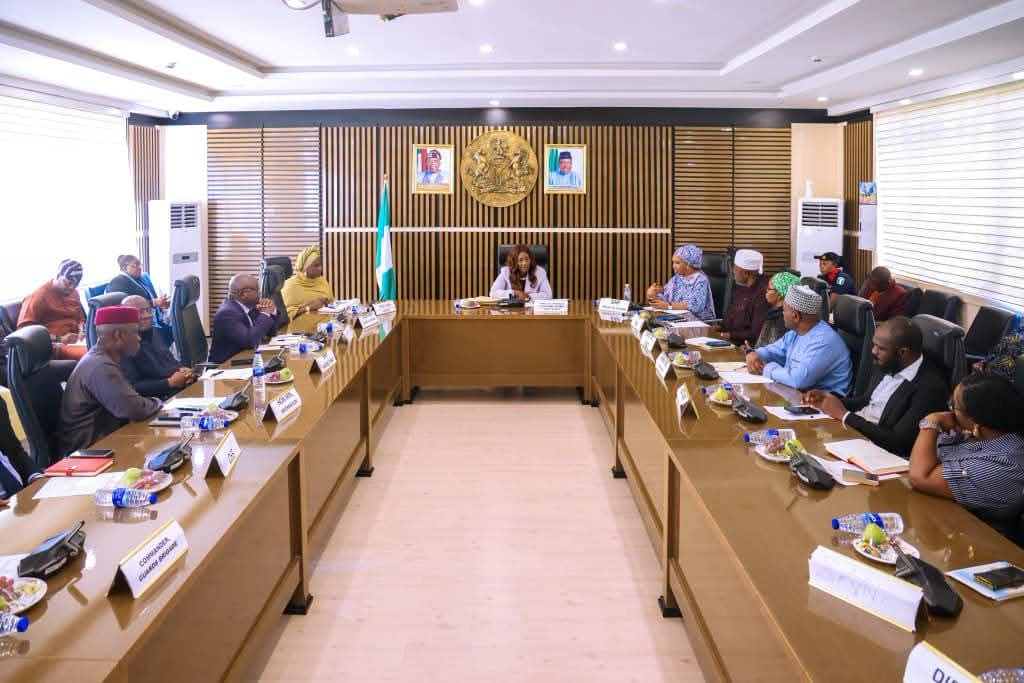
Edo State Governor, Senator Monday Okpebholo, on Friday received the remains of Chief Dan Orbih at the Benin Airport.
Chief Orbih, a chieftain of the Peoples Democratic Party (PDP) and Chairman of the Governing Council of Ambrose Alli University, Ekpoma, died on August 31, 2026, at the age of 64.
His remains arrived at the airport at about 9:55 a.m. and were received by Governor Okpebholo, accompanied by the Secretary to the State Government and other top government officials.
The Governor led family members and political associates in a motorcade from the airport to Orbih’s Benin residence, where a brief lying-in-state ceremony was held
Speaking at the residence, Governor Okpebholo described Orbih’s death as a great loss to Edo State, saying the deceased was more than a political associate.
“He was a brother,” the Governor said.
“At times like this, when the loss is difficult to bear, we can only turn to God for comfort and strength. I pray that God will give us all the courage and fortitude to bear this great loss. I also pray that God will protect the family, strengthen them during this difficult period and provide them with the grace to carry on.” He also added
Officiating priest, Rev. Fr. Palmer Ikponmwosa, in his tribute, described Orbih as a colossus of Edo politics, a master tactician, leader and kingmaker.
Other political leaders, including PDP chieftain Chief Pascal Ugbome and APC chieftain Pastor Osagie Ize-Iyamu, also paid glowing tributes, describing him as courageous, generous and compassionate.
Chief Orbih was former Chairman of the PDP in Edo State and former National Vice Chairman, South-South of the party.
As announced by the family, the final rites, which commenced in Abuja on Wednesday with a Requiem Mass and Night of Tributes at the Bola Ahmed Tinubu International Conference Centre, will continue in his hometown, Ogbona, Etsako Central Local Government Area.
According to the funeral programme, a Vigil Mass will hold today, Friday, October 9, at St. John’s Catholic Church, Ogbona by 4:00 p.m.
A Funeral Mass will follow on Saturday, October 10, at 10:00 a.m. at the same venue, with interment at his country home immediately after.
The obsequies will be rounded off on Sunday, October 11, with a Thanksgiving Mass at St. John’s Catholic Church, Ogbona by 10:00 a.m.
A man, Monsuru Musa, has been apprehended for impersonation after he was caught writing a promotion examination for his father in Abuja.
Monsuru was arrested on Wednesday at the examination centre located within the National Open University of Nigeria (NOUN) premises, while writing the exam for his father, Musa Mohammed, a staff of the FCT Fire Service.
The examination was organised by the FCT Civil Service Commission.
He was apprehended by security operatives deployed to monitor the exercise, following measures put in place at the instance of the FCT Minister, Nyesom Wike, to curb examination malpractice and impersonation.
During interrogation, Monsuru claimed his father was ill and had asked him to write the examination on his behalf.
When asked about his father’s age, Monsuru said he was between 67 and 68 years old. However, his father gave a different age, saying he would turn 60 in February 2027, a discrepancy that prompted further questioning.
The father, Musa Mohammed, also told interrogators that he completed primary school in 1977 and secondary school in 1982.
Both father and son have been handed over to the Nigeria Police Force for further investigation after making statements to operatives of the Department of State Services (DSS).
Twin sisters, a medical doctor and a pharmacist, have died two days apart from complications linked to sickle cell disease in Yobe State.
The deceased are Dr. Hadiyah Usman Abdullahi and Pharm. Aidah Usman Abdullahi, daughters of Prof. Hadiza Abdullahi Usman, Medical Director of the Federal Medical Centre (FMC), Nguru.
Dr. Hadiyah, an intern in the Department of Haematology at FMC Nguru, died on Friday, October 2, 2026, after about a week on admission following a sickle cell crisis.
Her twin sister, Aidah, a pharmacist at the University of Maiduguri Teaching Hospital (UMTH), was also hospitalized for similar complications at the same time.
Iconic news gathered that Aidah was discharged after her condition improved to attend her sister’s burial. She reportedly collapsed shortly after visiting her sister’s grave and was rushed to the hospital, where she died on Sunday, October 4, 2026.
A family member, Ibrahim Auwal, who confirmed the incident on Monday, described the deaths as devastating to the family.
The sisters have been buried according to Islamic rites in Nguru.
With the current development, the medical community has been thrown into mourning, with renewed calls for increased awareness on sickle cell disease and the importance of genotype compatibility before marriage
A Special High Court sitting in Benin has convicted and sentenced four men to death for kidnapping and other related offences.
The convicts, Marvellous Isaac, Wisdom Michael, Rufus Emete Michael and Gift Raphael, were found guilty of kidnapping a woman at the Vegetable Market along Airport Road, Benin City
They were tried on an 11-count charge bordering on kidnapping, conspiracy, armed robbery, cultism and unlawful possession of firearms. The judgment, delivered on Tuesday, is the maiden judgment of the Special Criminal Court on kidnapping.
Delivering the judgement, Justice Aigbona Momodu said the law left him with no discretion in imposing the prescribed sentences.
“My hands are tied under the law. I wish the law would permit me to exercise my discretion. I would have, but my hands are tied. I will just impose the sentence as prescribed by the law,” the judge said.
Justice Momodu sentenced Isaac to seven years imprisonment on count one, death by hanging or lethal injection on counts two to nine, 10 years imprisonment on count 10 and life imprisonment on count 11.
Wisdom Michael bagged 7 years on count one and death on counts two to nine; Rufus Emete Michael, 7 years on count one and death on counts two, three, four, six and seven; while Gift Raphael got 7 years on count one and death on counts two, four, six and eight.
The court also ordered the confiscation of a JoJef pump-action firearm and four cartridges tendered as exhibits.
By Samson R.Osagie, Ph.D Abstract The financing of tertiary education has remained a persistent policy challenge in Nigeria, particularly against the backdrop of rising educational costs, economic hardship, and increasing barriers to access. The introduction of the Nigerian Education Loan Fund (NELFUND) under the administration of President Bola Ahmed Tinubu represents a significant intervention aimed at expanding access to higher education through an institutionalised, interest-free student loan framework.
A .This paper examines the impact of NELFUND on tertiary education in Nigeria and evaluates whether the scheme can emerge as an enduring legacy of the Tinubu education policy. Using a doctrinal and analytical research methodology, the paper situates NELFUND within the broader history of educational financing reforms in Nigeria by comparing it with earlier educational policies, particularly the free education programmes associated with the Awolowo and Unity Party of Nigeria (UPN) eras.
1.Introduction Education financing has remained a major issue in the development of the educational system in Nigeria.[1] Education is on the concurrent Legislative list being item … in Schedule….Part …….of the Constitution of the Federal Republic of Nigeria 1999( as amended). It therefore means that both the Federal and sub national governments within the republic have constitutional responsibilities to promote sustainable education policy in Nigeria. Since independence, successive governments have introduced policies aimed at expanding access to education and promoting national development through public investment in human capital.[2] Education has consistently been regarded as an important instrument for social mobility, economic growth, and national transformation.[3] Consequently, different administrations have adopted various funding mechanisms to reduce financial barriers and widen educational opportunities for citizens.[4] Among the earliest major educational interventions in Nigeria was the Free Primary Education Scheme introduced in 1955 by the former Premier of the Western Region Chief Jeremiah Obafemi Awolowo. The policy significantly expanded literacy and educational access within the region and later influenced similar educational reforms in other parts of the country. This commitment to publicly support education continued with the introduction of the Universal Primary Education (UPE) Scheme in 1976 and the Universal Basic Education (UBE) Programme introduced in 1999 and backed by the Universal Basic Education Act, 2004.[5]Despite these interventions, financing tertiary education has remained a persistent challenge.[6] Economic instability, population growth, inflation, inadequate public funding, and declining household income have continued to place enormous pressure on universities, polytechnics, and colleges of education. Rising tuition and associated educational costs have increasingly limited access to higher education, particularly for students from economically disadvantaged backgrounds.[7] As a result, many qualified Nigerians encounter serious financial obstacles in pursuing or completing tertiary education. It was against this background that the administration of President Bola Ahmed Tinubu, GCFR introduced the Nigerian Education Loan Fund (NELFUND) pursuant to the Student Loans (Access to Higher Education) (Repeal and Re-Enactment) Act, 2024.[8] The scheme was established to provide interest-free educational loans to eligible students in public tertiary institutions and vocational centres, with repayment structured to commence after graduation and employment. Unlike earlier state-funded free education programmes, NELFUND adopts a loan-based financing model intended to balance accessibility with financial sustainability. The policy, therefore, represents a significant shift in Nigeria’s approach to tertiary education financing.[9] The introduction of NELFUND has generated considerable public and scholarly debate.[10] While supporters regard the scheme as an important intervention capable of reducing financial exclusion in higher education, concerns have also been raised regarding funding sustainability, repayment[11] feasibility, administrative efficiency, and policy continuity.[12] These issues raise important questions concerning whether the scheme can achieve its objectives and whether it possesses the institutional strength necessary to endure beyond the present administration.[13] This study, therefore, examines the impact of NELFUND on tertiary education in Nigeria and evaluates whether it can emerge as an enduring legacy of the Tinubu administration. The study further analyses the legal and institutional framework of the scheme, compares it with earlier educational reforms such as the free education programmes associated with the Awolowo and UPN eras, and considers the necessity of constitutional entrenchment through an amendment to Section 315 of the Constitution of the Federal Republic of Nigeria, 1999 (as amended) in order to ensure the sustainability and long-term continuity of the policy.
Conceptual Clarifications and Theoretical Framework 2.1 Education Policy Education policy[14] refers to the body of principles, laws, guidelines, and governmental decisions formulated to regulate and promote the development of education within a state. It encompasses the objectives, strategies, and institutional mechanisms adopted by the government to ensure the provision, administration, financing, and accessibility of education.[15] Education policies are usually designed to address societal needs such as literacy development, manpower training, economic growth, social equality, and national integration. 2.2 Student Loan Schemes Student loan schemes refer to financial assistance programmes established to support students in meeting the costs associated with education, particularly at the tertiary level.[16] Under such schemes, eligible students are provided with loans to cover tuition fees, accommodation expenses, instructional materials, or other educational costs, subject to repayment under specified conditions. The Student Loan systems are widely utilised across various jurisdictions as mechanisms for widening access to higher education while reducing the immediate financial burden on students and their families. 2.3 Enduring Legacy in Public Policy An enduring legacy in public policy refers to a governmental initiative, reform, or programme whose impact remains significant and sustainable long after the administration responsible for its introduction has left office.[17] Such policies usually produce long-term social, economic, political, or institutional benefits that continue to impact society across generations. An enduring legacy is therefore measured not merely by immediate popularity or usefulness, but by continuity, effectiveness, institutional relevance, and historical significance. 2.4 Human Capital Theory This study is anchored on the Human Capital Theory,[18] which views education as an investment capable of improving the productive capacity of individuals and contributing to national economic development. The theory was popularised by economists such as Theodore Schultz and Gary Becker, who argued that expenditure on education should not be regarded merely as social spending but as an investment in human productivity and economic growth.[19] According to the theory, educated individuals are more likely to possess the skills, knowledge, and competencies necessary for innovation, employment, and increased productivity. 2.0 A Brief History of Educational Policy Development in Nigeria The development of educational policy in Nigeria may be traced to the colonial period, when Western education was largely introduced and financed by Christian missionary organisations with limited support from the colonial administration.[20] During this era, educational development was uneven, with greater concentration in Southern Nigeria than in the Northern region.[21] Educational funding during this period remained inadequate and heavily dependent on missionary activities, resulting in disparities in access and educational advancement across different regions of the country.[22]Following independence in 1960, successive Nigerian governments have increasingly recognised education as an instrument for economic growth, social mobility, and national integration.[23] The post-independence period also witnessed major federally funded educational initiatives such as the Universal Primary Education (UPE) Scheme introduced in 1976[24] under the military administration of General Olusegun Obasanjo and the Universal Basic Education (UBE) Programme also introduced by his civilian administrationin 1999.[25] These programmes reflected the growing recognition that government intervention was necessary to increase access to education. Nevertheless, implementation challenges such as inadequate infrastructure, poor funding, corruption, and weak administrative capacity and inability of sub national government to access the funds for improvements in Education infrastructures limited the achievement of these programmes. One of the most significant educational reforms in Nigerian history was the Universal Free Primary Education Scheme introduced in 1955 by Chief Obafemi Awolowo in the Western Region of Nigeria. The policy was founded on the belief that education constituted a fundamental tool for social transformation, economic development, and political advancement. Under the programme, primary education was made free and accessible to children within the region, irrespective of socio-economic background.[26] The Awolowo education policy produced substantial improvements in literacy rates, school enrolment, and human capital development within the Western Region. The programme became widely celebrated as one of the most successful social welfare policies in Nigeria’s history and established Awolowo’s reputation as a visionary advocate of mass education. The success of the policy subsequently influenced educational reforms in other regions of Nigeria and shaped later national educational initiatives. Despite its achievements, the programme also encountered challenges relating to funding pressures, teacher shortages, and infrastructural demands arising from increased enrolment. Nevertheless, the policy remains historically important because of its long-term contribution to educational advancement and regional development. It is frequently referenced in contemporary educational discourse as an example of an enduring educational legacy sustained by strong political commitment and governmental investment.[27]
Legal and Institutional Framework of NELFUND The legal foundation of the Nigerian Education Loan Fund (NELFUND) is rooted in the Student Loans (Access to Higher Education) (Repeal and Re-Enactment) Act, 2024, signed into law by President Bola Ahmed Tinubu on 3 April 2024. The re-enactment of the legislation followed widespread concerns regarding the inadequacies of the earlier Student Loan Act of 2023, which faced criticism relating to governance structure, restrictive eligibility conditions, repayment mechanisms, and implementation challenges. The revised Act was therefore introduced to create a more functional and inclusive legal framework capable of improving access to higher education and vocational training for Nigerian students.[28] The 2024 Act formally established NELFUND as a corporate body with perpetual succession and legal personality capable of suing and being sued in its corporate name. The primary objective of the Act is to provide financial assistance to qualified Nigerians seeking higher education and vocational training in approved institutions within Nigeria. Under the scheme, beneficiaries may obtain interest-free loans to cover tuition fees, institutional charges, and upkeep expenses during their period of study.[29] Another notable feature of the 2024 Act is the expansion and liberalisation of eligibility requirements. Unlike the repealed 2023 legislation, which imposed restrictive income-based conditions on applicants, the revised Act removed family income limitations and broadened access to eligible Nigerian students enrolled in recognised public tertiary institutions and approved vocational centres. Applicants are generally required to possess valid identification credentials, such as the Bank Verification Number (BVN), while institutional verification forms part of the application and approval process. The revised framework was intended to make the scheme more inclusive and accessible to students from diverse socio-economic backgrounds.[30] The Act establishes an institutional framework for the governance, management, and administration of the Nigerian Education Loan Fund. Its provisions are organised to address the objectives, powers, and functions of the Fund, as well as matters relating to its governing structure and administration. The legislation makes provision for a Board of Directors, management personnel, and staff of the Fund, and sets out rules concerning their responsibilities, composition, appointment, tenure, and removal.[31] In addition to its governance framework, the Act also contains provisions relating to funding, loan disbursement, repayment, auditing, and financial accountability. The legislation establishes a General Reserve Fund financed through National Assembly appropriations, grants, donations, investment income, charges and fees generated by the Fund, and repayments arising from loan operations. Loan repayment is structured to commence after graduation and employment, thereby attempting to reduce immediate financial pressure on beneficiaries. The inclusion of auditing and reporting obligations further reflects legislative efforts to strengthen transparency, accountability and public confidence in the administration of the Fund.[32]
O Impact of NELFUND on Tertiary Education in Nigeria
5.1 Keeping with the Educational Objectives of Government. The Constitution in Chapter 2 established the Fundamental Objectives and Directive Principles of State Policy. Section…. of the Constitution provides for the Educational Objectives as one of the core Fundamental Objectives of government in Nigeria. It provides as follows: Although not justiciable in view of Section 6(6)(c), the NELFUND’s education policy can be seen as of of government’s direct response to the Educational objectives provided by the Constitution.
5.2 Expansion of Access to Tertiary Education
One of the principal objectives of the Nigerian Education Loan Fund (NELFUND) is the expansion of access to tertiary education in Nigeria.[33] Prior to the introduction of the scheme, many qualified Nigerian students were unable to pursue higher education due to financial incapacity. By providing interest-free loans to eligible students, NELFUND seeks to reduce these financial obstacles and broaden participation in universities, polytechnics, and colleges of education.[34]
5.3 Reduction of Financial Barriers for Students and Families.
The increasing cost of tertiary education in Nigeria has placed enormous financial pressure on students and their families.[35] Beyond tuition fees, students are often required to bear accommodation costs, transportation expenses, instructional material charges, and other institutional levies. These financial demands have contributed to high dropout rates, deferred admissions, and educational discontinuity among economically disadvantaged students.[36] NELFUND attempts to address these challenges by providing structured financial assistance capable of reducing the immediate economic burden associated with higher education.
5.4 Promotion of Equity and Inclusion
NELFUND also reflects an attempt to promote equity and inclusion within the Nigerian educational system.[37] Historically, access to tertiary education has been significantly influenced by socio-economic status, geographical disparities, and unequal access to financial resources. Students from poor and rural backgrounds frequently encounter greater obstacles in securing and sustaining tertiary education. The establishment of the scheme, therefore, seeks to reduce educational inequality[38] by creating broader access to educational financing irrespective of economic background.
5.5 Human Capital Development and National Productivity
The relationship between education and national development remains central to the rationale behind NELFUND. Modern economies depend significantly on skilled manpower, technological innovation, and intellectual capacity for sustainable growth. By increasing access to tertiary education and vocational training, the scheme aims to strengthen human capital formation and improve the productive capacity of Nigerian citizens. This objective is consistent with the Human Capital Theory, which views educational investment as essential for economic productivity and national advancement.[39]
5.6 Early Outcomes and Measurable Indicators Although NELFUND remains a relatively recent initiative, certain early outcomes suggest increasing public engagement with the programme. Following the commencement of applications and loan disbursements, reports indicated that thousands of students across public tertiary institutions applied for financial support under the scheme.[40] These early developments demonstrate growing awareness of the programme and suggest that educational financing remains a major concern among Nigerian students. However, a comprehensive assessment of the long-term impact of the scheme will depend on sustained implementation, institutional transparency, accurate data management, and effective monitoring mechanisms.
Challenges to the Implementation of NELFUND 6.1 Inadequate Funding and Sustainability Concerns Despite the significance of the Nigerian Education Loan Fund (NELFUND) as an educational financing initiative, concerns have emerged regarding the long-term sustainability of the scheme.[41] Educational loan programmes require substantial and continuous financial support in order to accommodate increasing student populations and rising educational costs. In Nigeria, where economic instability, fluctuating government revenues, and competing national priorities frequently affect public expenditure, sustaining adequate funding for NELFUND may become increasingly difficult over time. However, this challenge is not apparent at the moment. 6.2 Administrative Bottlenecks and Bureaucracy Administrative inefficiency constitutes another major challenge confronting the implementation of NELFUND. Public sector programmes in Nigeria have historically experienced delays[42] associated with bureaucratic procedures, institutional overlap, and weak administrative coordination. The student loan scheme requires effective collaboration among educational institutions, verification agencies, financial institutions, and governmental bodies in order to function efficiently.
6.3 Corruption and Transparency Risks Corruption and lack of transparency remain persistent challenges within many public institutions in Nigeria, and these concerns have also been raised in relation to NELFUND.[43] Educational financing schemes involving large-scale public funds are often vulnerable to mismanagement, favouritism, diversion of resources, and weak accountability mechanisms.[44] There is therefore concern that the absence of effective monitoring and transparency structures could undermine the credibility and sustainability of the programme. 6.4 Graduate Unemployment and Repayment Concerns One of the most significant practical challenges that is expected to confront the NELFUND scheme and affect it’s sustainability relates to graduate unemployment and the feasibility of loan repayment.[45] The repayment framework established under the Act is largely dependent on beneficiaries securing employment after graduation. However, Nigeria continues to experience high rates of youth unemployment and underemployment, particularly among university graduates. This raises concerns regarding the ability of many beneficiaries to fulfil repayment obligations within the prescribed timeframe. If the scheme is to remain enduring future funding of the scheme will not need to depend solely or substantially on repayment by beneficiaries. 6.5 Inflation and Economic Instability Nigeria’s persistent inflationary pressures and economic instability also present serious challenges to the effective implementation of NELFUND.[46] Rising inflation affects both the cost of education and the general cost of living, thereby increasing the financial needs of students beyond the value of available loan support. Tuition fees, accommodation costs, transportation expenses, and educational materials continue to rise in response to broader economic conditions. 6.6 Political Instability and Policy Reversals Political instability has historically undermined the sustainability of many public policies in Nigeria.[47] Changes in government frequently result in policy modifications, abandonment of previous programmes, or shifts in administrative priorities. Educational reforms are particularly vulnerable to such political transitions, especially where policies are closely associated with a particular administration or political ideology.[48]
Comparative Analysis of NELFUND and Earlier Educational Financing Models in Nigeria Any meaningful assessment of the Nigerian Education Loan Fund (NELFUND) as an enduring educational legacy must be situated within the wider historical context of educational reforms in Nigeria. The most significant comparative reference points are the Universal Free Primary Education policy introduced by Chief Obafemi Awolowo in the Western Region in 1955 and the free education programmes implemented by Unity Party of Nigeria (UPN) governments during the Second Republic.[49] Both initiatives were founded on a welfare-oriented philosophy that treated education as a social right requiring direct governmental financing. Through substantial public investment, these policies expanded educational access and became strongly associated with social mobility, literacy growth, and developmental governance. NELFUND differs from these earlier models in both philosophy and institutional design. Whereas the Awolowo and UPN programmes relied principally on direct public funding and free educational provision, NELFUND adopts a loan-based financing framework targeted at tertiary education.[50] The scheme reflects a shared-responsibility approach in which the government provides financial assistance subject to post-graduation repayment. Consequently, the Tinubu administration’s model represents an adaptation of educational intervention to contemporary fiscal realities, seeking to reconcile accessibility with long-term financial sustainability. Despite these differences, important similarities remain. Like the earlier reforms, NELFUND emerged as a policy response to structural inequalities affecting access to education and was introduced against a backdrop of socio-economic pressures. Each model recognises education as a critical instrument for human capital development, national productivity, and social advancement. In this respect, NELFUND continues Nigeria’s broader tradition of state intervention in educational development, even though it departs from the purely welfare-driven structure of earlier programmes. The comparison between free education and student loan financing reveals the distinct strengths and limitations of both approaches. Free education models generally achieve stronger immediate accessibility because beneficiaries are not burdened by tuition costs or repayment obligations. This partly explains the enduring historical significance of the Awolowo and UPN programmes, which rapidly expanded educational participation and generated visible developmental outcomes. However, such programmes often impose considerable fiscal demands on the government and may become difficult to sustain during periods of economic instability, population expansion, and declining public revenue. By contrast, the student loan model potentially offers greater financial continuity through revolving funding and repayment mechanisms. NELFUND’s zero-interest structure seeks to reduce financial exclusion while maintaining a measure of sustainability absent from many fully subsidised educational systems. Nevertheless, the effectiveness of this model depends heavily on broader institutional and economic conditions, including administrative efficiency, employment opportunities, repayment compliance, and public confidence. In economies characterised by unemployment, inflation, and governance challenges, loan recovery systems may encounter significant operational difficulties. The comparative question of accessibility, sustainability, and long-term impact is ultimately central to determining whether NELFUND can emerge as an enduring legacy of the Tinubu administration.
NELFUND as an Enduring Legacy of the Tinubu Administration. In governance, political legacy[51] refers to the lasting influence of a policy or administration beyond the tenure of its creators. A policy becomes a genuine legacy when it survives political transition, becomes institutionally accepted, and produces measurable social impact. Educational reforms[52] often acquire this status because of their direct connection to social mobility, economic development, and human capital formation.[53] This explains the enduring relevance of educational policies associated with leaders such as Obafemi Awolowo. Against this background, the central question is whether the Nigerian Education Loan Fund (NELFUND) can evolve into an enduring legacy of the Tinubu administration. The significance of the scheme lies in its attempt to address a longstanding challenge in Nigerian tertiary education: financial exclusion. However, the status of NELFUND as a transformative reform remains conditional. Transformative policies are not judged merely by legislative enactment or policy ambition, but by implementation, institutional credibility, and long-term outcomes. Nigeria’s policy experience demonstrates that many promising reforms failed because of weak administration, inadequate funding, corruption, or political instability.[54] NELFUND’s historical significance will therefore depend on whether it can produce sustained improvements in tertiary educational access and maintain public confidence over time. Institutional continuity beyond the present administration is equally important. Many Nigerian reforms have struggled to survive changes in government due to weak institutional foundations and shifting political priorities. For NELFUND to become a genuine legacy, it must develop beyond its association with a single administration and acquire broader national legitimacy. This concern reinforces the argument for stronger legal protection through the incorporation of the Nigerian Education Loan Fund Act into Section 315 of the Constitution in order for the scheme to acquire constitutional flavour not capable of been easily repealed or eroded This attempt to Constitutionally entrenchthe Act may strengthen continuity, reduce vulnerability to political reversal, and support the long-term institutional stability of the scheme. Ultimately, whether NELFUND becomes an enduring legacy of the Tinubu education policy will depend on sustained implementation, public legitimacy, and institutional durability. If the scheme succeeds in expanding tertiary educational access while maintaining credibility and continuity across political administrations, it may attain lasting significance within Nigeria’s educational history. If not, it risks joining the long list of ambitious but short-lived reforms that failed to achieve enduring national impact.
Recommendations 9.1 Constitutionalism and the Need for Legal Entrenchment A major challenge confronting public policies in Nigeria is political instability arising from changes in government and shifting administrative priorities. Numerous educational reforms have historically failed because they lacked sufficient legal and institutional protection capable of preserving continuity beyond the tenure of the administrations responsible for their introduction. The principle of constitutionalism, therefore, becomes highly relevant to the long-term sustainability of NELFUND. Constitutionalism [55]emphasises the supremacy of legal structures and institutional safeguards in ensuring continuity, stability, and protection against arbitrary governmental action. In view of the strategic importance of educational financing to national development, there is a compelling argument for protecting NELFUND from future policy reversals through constitutional entrenchment.[56] This may be achieved through an amendment to section 315(5)(e) of the Constitution of the Federal Republic of Nigeria, 1999 (as amended), by incorporating the Nigerian Education Loan Fund Act, 2024, among statutes accorded constitutional protection. Such entrenchment would place the legislation in a position similar to the Land Use Act and the National Youth Service Corps Act, thereby strengthening its permanence and institutional stability. 9.2 Sustained Funding Through Statutory Allocations For the Nigerian Education Loan Fund (NELFUND) to endure as a credible educational financing mechanism, sustainable funding must remain a central priority.[57] Educational loan schemes require continuous financial support capable of accommodating rising student populations, inflation, and increasing institutional costs. Overreliance on discretionary annual governmental allocations may expose the programme to fiscal uncertainty and political instability.[58] Consequently, there is a need for stable statutory funding arrangements supported by diversified revenue sources capable of guaranteeing continuity irrespective of changing economic conditions. 9.3 Transparent Administration and Public Accountability Transparency and accountability are indispensable to the legitimacy and effectiveness of any public welfare programme. Given Nigeria’s historical challenges relating to corruption and institutional inefficiency[59], the administration of NELFUND must be guided by strict financial oversight and transparent operational procedures. Public confidence in the programme will depend significantly on whether funds are properly managed and fairly distributed to eligible beneficiaries. Independent auditing mechanisms, periodic public reporting, and effective anti-corruption safeguards should therefore be institutionalised within the operational structure of the scheme. 9.4 Employment-Linked Repayment Structure The sustainability of the loan scheme depends significantly on the practicality of its repayment framework. Considering the high rate of unemployment and underemployment among graduates in Nigeria, repayment structures must remain flexible and responsive to prevailing economic realities. Strict or unrealistic repayment conditions may discourage participation and increase default rates. 9.5 Periodic Legislative Review of the Act Educational financing policies operate within constantly evolving economic and social environments. Consequently, the Nigerian Education Loan Fund Act, 2024, should not remain administratively static. Periodic legislative review is necessary to address implementation challenges, emerging educational realities, technological developments, and economic fluctuations.
10.0Conclusion The Nigerian Education Loan Fund (NELFUND) represents a significant intervention in the financing of tertiary education in Nigeria. Introduced against the backdrop of rising educational costs, limited access to tertiary education by indigent students and persistent funding challenges, the scheme reflects an effort by the Tinubu administration to institutionalise a more structured and globally acceptable approach to educational support. Unlike earlier free education models associated with the Awolowo and UPN eras, NELFUND adopts an interest-free loan framework intended to balance educational accessibility with financial sustainability. This study has shown that the scheme possesses considerable potential to widen access to tertiary education, reduce financial barriers, and strengthen human capital development. However, its long-term success depends on effective implementation, sustainable funding, administrative efficiency, transparency, and favourable economic conditions, particularly in relation to graduate employment and repayment capacity. As with many public reforms in Nigeria, political instability and institutional weakness remain significant risks. Whether NELFUND ultimately emerges as an enduring legacy of the Tinubu education policy will depend not merely on its statutory existence but on its ability to achieve lasting educational impact and survive beyond the present administration. This underlines the importance of strengthening the scheme’s legal foundation through the proposed incorporation of the Nigerian Education Loan Fund Act, 2024, into section 315 of the Constitution of the Federal Republic of Nigeria, 1999 (as amended). In the final analysis, the future of tertiary education financing in Nigeria will require policies that combine accessibility, accountability, sustainability, and institutional continuity.
*Dr Samson R.Osagie is a Legal Practitioner and a Former Attorney General of Edo State.
References Aboluwodi A, ‘Political Will and Strategic Planning in the Implementation of Universal Basic Education in Nigeria: The Obafemi Awolowo Example’ JER (2015) 5(1), 41-55 Abuh A and Omolaoye S, ‘NELFUND law ensures equal access to education’ The Guardian (2026). Available at: https://guardian.ng/news/nelfund-law-ensures-equal-access-to-education/ (accessed 18 May 2026) Action Aid, ‘ActionAid Nigeria Demands Accountability, Suspension and Severe Penalties for Leaders of NELFUND-Fraudulent Institutions’ (2025). Available at: https://nigeria.actionaid.org/news/2025/actionaid-nigeria-demands-accountability-suspension-and-severe-penalties-leaders-nelfund (accessed 18 May 2026) Adesua VO, ‘Implementation of Educational Policy for Socio – Economic and Political Emancipation in Nigeria’ British Journal of Education (2022) 10(10), 51-59 Ajayi SA, ‘The development of free primary education scheme in western Nigeria 1952-1966: An analysis’ OGIRISI: a New Journal of African Studies (2010) 5, 1-12 Akinteye JO, ‘Financial Aid for Boosting Access to Higher Education in Nigeria: The Case of Nigerian Education Loans Fund’ Social Science and Humanities Journal (2025) 9(3) Amadi VU and Nwogu UJ, ‘The Impact of Funding on Educational Development in Nigeria’ JEDA (2023) 31(3) American University, ‘What Is Education Policy?’. Available at: https://www.american.edu/baker/graduate/articles/what-is-education-policy.cfm (accessed 18 May 2026) Awu E, Darius B and Chimele MP, ‘Human Capital Theory: Viewing Employees as Organizational Asset’ IJAMSR (2025) 9(3) Ayoko VO, ‘Students’ Loan in Nigerian’ Tertiary Institutions: Benefits and Problems’ EJINE (2025) 5(6) Barber NW, ‘Why entrench?’ International Journal of Constitutional Law (2016) 14(2), 325–350. Available at: https://doi.org/10.1093/icon/mow030 (accessed 19 May 2026) Bloomberg, ‘Nigerian Inflation at almost 29% High before Data Rejig’ (2025). Available at: https://www.bloomberg.com/news/articles/2025-01-15/nigerian-inflation-rate-nears-29-year-high-before-data-overhaul (accessed 17 May 2026) Bruns B and Schneider BR, ‘Managing the Politics of Quality Reforms in Education: Policy Lessons from Global Experience’ Paper presented at the Oxford University/RISE Conference, Oxford (2013) David A, ‘How Have University Fees Changed in Nigeria?’ Insights & Stats (2024). Available at: https://www.insightsandstats.com/article/how_have_university_fees_changed_in_nigeria_ (accessed 16 May 2026) Edmun Okafor, ‘Student Loan Act: A Superficial Solution to a Deeper Problem in Nigerian Education’ The Cable. Available at: https://www.thecable.ng/student-loan-act-superficial-solution-deeper-problem-nigerian-education/ (accessed 18 May 2026) Ekwonye EN, ‘Educational policies and national development in Nigeria’ International Journal of Economics, Environmental Development and Society (2025) 6(2b), 371-380 Eneh OC and Owo NJ, ‘Education reforms in the Nigerian university system: A critique and suggested strategies’ Knowledge Review (2009) 19, 97-106 Erunke J, ‘Student loan: NELFUND threatens legal action against institutions engaging in deceptive practices’ Vanguard (2025). Available at: https://www.vanguardngr.com/2025/04/student-loan-nelfund-threatens-legal-action-against-institutions-engaging-in-deceptive-practices/ (accessed 18 May 2026) Eze HC and others, ‘Funding of Education In Nigeria: A Focus on National Policy on Education’ Review of Education (2024) 36(1) Ezeh SC and Amaechina AU, ‘Reforms and Innovations of Nigerian Education: The Journey so Far’ Nigerian Academic Forum (2019) 26(1) Faboyede OS, Faboyede AO and Fakile AS, ‘Funding of University Education in Nigeria: Challenges and Prospects’ European Journal of Social Sciences Studies (2017) 2(8) Fabunmi M, ‘Historical Analysis of Educational Policy Formulation In Nigeria: Implications For Educational Planning And Policy’ International Journal of African & African American Studies (2005) IV(2) Fatimayin F, Edinoh K and Grace OOI, ‘Perception of Undergraduate Students on Implementation of Student Loan Programme in Tertiary Education in Nigeria’ Central Asian Journal of Social Sciences and History (2024) 5(3), 6–11 Fong C, Malhotra N and Margalit Y, ‘Political Legacies: Understanding Their Significance to Contemporary Political Debates’ Political Science & Politics (2019) 52(3), 451-456 Hussein AI, ‘The Effect of Poverty on Education in Nigeria: Obstacles and Solutions’ International Journal of Sustainable Development (2010) 1(4), 55-72 Imam H, ‘Educational Policy in Nigeria Educational Policy in Nigeria from the Colonial Era to the Post-Independence Period Educational Policy in Nigeria’ IJSE (2012) 4(1), 183-204 Isah EA and Akinwumi FS, ‘Free education in Nigeria: History, issues, challenges and prospects’ (2016). Available at: https://www.researchgate.net/publication/355154619_free_education_in_nigeria_history_issues_challenges_and_prospects (accessed 18 May 2026) Isiaka A and Olaniyan DY, ‘The Nigerian Education Loan Fund: A Path to Inclusion or a Debt Trap?’ BAICE (2024). Available at: https://baice.ac.uk/hub/the-nigerian-education-loan-fund-a-path-to-inclusion-or-a-debt-trap/ (accessed 16 May 2026) Jacob PK and others, ‘Nigerian Education Loan Fund (Nelfund) and Students in Tertiary Institution in Nigeria’ Taraba International Journal of Social Sciences Research (2025) 2(1) Japheth IM, Ubulom WJ, Igbanibo K and Chimezie F, ‘Educational Reforms in Nigeria: Successive Years of Inconsistencies and Confusions’ Proceedings of the Fourth African Regional Conference on Sustainable Development (2010) 4(14) Joshua O, ‘The Imperishable Impact of Chief Obafemi Awolowo’ (2023). Available at: http://dx.doi.org/10.2139/ssrn.4700447 (accessed 17 May 2026) Lawal BO, ‘The Immediate and Long Term Effects of the UPN Free Secondary Education Policy in Oyo State, Nigeria’ International Review of Social Sciences and Humanities (2012) 3(1), 182-187 NELFUND, ‘Frequently Asked Questions’. Available at: https://nelf.gov.ng/faq (accessed 17 May 20
The Federal Government has inaugurated the Inter-Ministerial Committee (IMC) for the commemoration of Nigeria’s 66th Independence Anniversary, with emphasis on reflecting on the enduring legacies of the founding fathers.
In a statement signed by Chris Ugwuegbulam, Head, Information & Public Relations, the Chairman of the Committee and Secretary to the Government of the Federation (SGF), Senator George Akume, CON, disclosed during the inaugural meeting held on Wednesday, September 17, 2026, in Abuja that the 66th anniversary provides an opportunity for Nigerians to reflect on the contributions, sacrifices and enduring legacies of the nation’s founding fathers and heroines who fought for Nigeria’s independence from colonial rule.
The SGF, who was represented at the event by the Permanent Secretary, Political and Economic Affairs Office (PEAO), Mrs. Bekearedebo Augusta Warrens, noted that the achievements recorded since independence were built on the foundation laid by the country’s nationalists, stressing the need to remember their sacrifices while reflecting on the nation’s journey since October 1, 1960.
According to him, the anniversary will also provide an opportunity for the present administration to showcase its achievements and highlight efforts being undertaken to reposition the country through its reform initiatives, against the backdrop of the socio-economic challenges confronting the nation.
He emphasised that activities for this year’s celebration will be low-key, and urged members of the Committee to work with urgency given the limited time before October 1.
The SGF disclosed that the programme of activities will commence with a World Press Conference on Thursday, September 24, 2026; Juma’at Service on Friday, September 25; Church Service on Sunday, September 27, 2026; Independence Day Public Lecture on Wednesday, September 30, 2026; and a nationwide broadcast by President Bola Ahmed Tinubu, GCFR, on Thursday, October 1, 2026.
Members of the Committee include the Honourable Minister of Finance and Coordinating Minister of the Economy, Mr. Taiwo Oyedele; Minister of Information and National Orientation, Mohammed Idris; Minister of Interior, Dr. Olubunmi Tunji-Ojo; Minister of Foreign Affairs, Amb. Bianca Odumegwu-Ojukwu; Minister of the Federal Capital Territory Administration, Barr. Nyesom Wike; Minister of Budget and Economic Planning, Sen. Abubakar Atiku Bagudu; National Security Adviser, Mallam Nuhu Ribadu; Special Adviser to the President on Policy Coordination, Hadiza Bala Usman; Special Adviser to the President on Information and Strategy, Mr. Bayo Onanuga; Special Adviser to the President on Media and Public Communications, Chief Sunday Dare; Permanent Secretary, State House, Engr. Temitope Peter Fashedemi; Permanent Secretary, General Services Office (GSO), Dr. Ibrahim Abubakar Kana, mni; Permanent Secretary, Federal Ministry of Health, Ms. Kachollom Daju, mni; Permanent Secretary, Cabinet Affairs Office (CAO), Dr. John Chidiebere Ezeamama; Inspector-General of Police, Mr. Olatunji Disu; Director-General, Department of State Services, Mr. Adeola Oluwatosin Ajayi; Commander, Guards Brigade, Brig. Gen. Adebisi Olusegun Onasanya; and Permanent Secretary, Political and Economic Affairs Office (PEAO), Mrs. Bekearedebo Augusta Warrens.
The Terms of Reference of the Committee include planning, organising and executing all approved activities for the October 1 celebration; co-opting any organisation or individual considered relevant to the successful execution of the programme; documenting activities for posterity; and undertaking any other assignment required for successful implementation.
Principal Partner of Samson Ima-Osagie & Associates and former Attorney General of Edo State, Dr. Samson Raphael Osagie, has been invited to speak at the 66th Annual General Conference of the Nigerian Bar Association, NBA, themed “Beyond Limits.”
In an invitation signed by the Chairman of the Annual General Conference Planning Committee, AGCPC, Abdul Mohammed, SAN, and the Secretary, Barbara Omosun, the NBA listed Osagie among the distinguished speakers selected for the 2026 edition.
He will serve as a panelist on the topic “Sovereign Wealth” and its role in driving Nigeria’s long-term economic development.
The conference will hold from August 21 to 28, 2026, at the Yakubu Gowon Stadium, Elekahia, Port Harcourt, Rivers State.
According to the association, the gathering will bring together jurists, policymakers, business leaders and industry experts to interrogate pressing national and global issues. These include economic growth, reforms in the legal sector, trade expansion, foreign exchange regulation and Nigeria’s global competitiveness.
The session will focus on how sovereign wealth funds and strategic investments can be deployed to promote sustainable growth, finance critical infrastructure, attract capital and strengthen economic resilience.
“As Nigeria pursues economic diversification and sustainable growth, strategic investment decisions have become more crucial than ever,” the invitation stated.
The NBA added that the session will provide a platform for in-depth dialogue on the legal, policy and governance frameworks required to support sound investment strategies, while also exploring practical pathways to secure prosperity for future generations.
The week-long conference will feature a keynote address by former Liberian President, George Weah, alongside other prominent speakers from Nigeria and overseas.
The invitation affirmed the association’s confidence in Dr. Osagie’s expertise and expressed optimism that his contribution will add value to discussions on strategic investments and national economic transformation.
Beyond the technical sessions, delegates are expected to participate in professional networking, peer learning, conversations on social justice, as well as entertainment and interactive programmes throughout the conference.
Dr Osagie’s participation as discussant at this all important professional conference is an acknowledgement of his recognition by the National professional body as a key figure with requisite knowledge and experience in Nigeria’s governance system.
Former Edo State Attorney General and Commissioner for Justice, Dr. Samson Osagie, has said the proposed bill to establish State Police in Nigeria could improve response to insecurity, but must be backed by strong legal frameworks and accountability
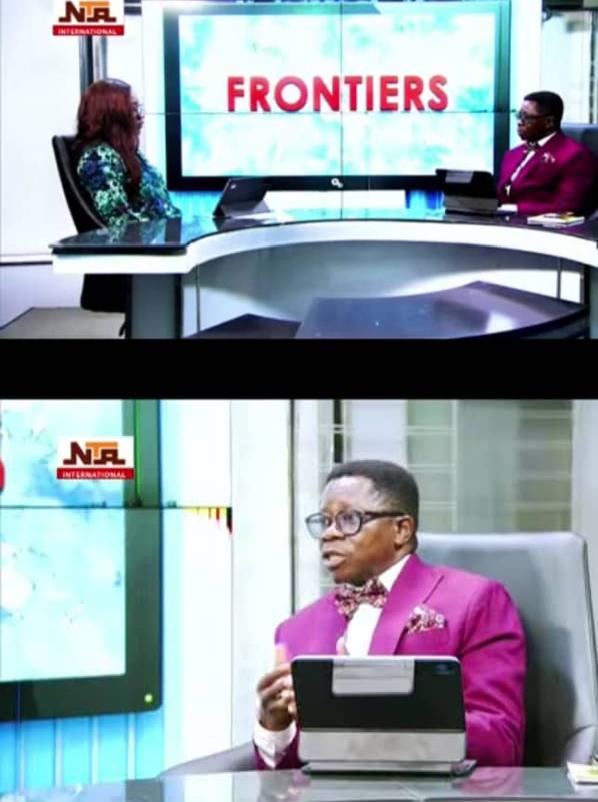
Speaking in an interview on the Frontiers, an NTA International Program, Dr. Osagie said the issue has generated intense national debate, with Nigerians divided on whether decentralising policing is the solution to the country’s security challenges.
According to him the Greek Proverb days “Necessity is usually the mother of all inventions,” Dr Samson Osagie said “After over a decade of battling insecurity, banditry, terrorism, and other forms of criminalities, it has become pertinent to explore new measures to end or minimize to the barest minimum the problemsof insecurity”
The former Federal Lawmaker also noted that Nigeria has been bedevilled by numerous security challenges under the current centralised police structure. He observed that state governments do not have control over the security architecture within their states, and as a result, government must “think outside the box.”
According to him, the Federal Government is now considering a state police structure intended to enable swifter response to security issues.
Dr. Osagie cited Sections 32, 34, 35 and 39 of the 1999 Constitution in which the phrase ” Nigerian Police Force ” was copiusly used as the sole law enforcement organ of the country with the mandate to ensure law and order, adding that the contemplation of an additional layer of policing is therefore not out of place within the framework of the nation’s constitution.
He further disclosed that Section 153 and 197 of the Constitution is being amended to provide for a dual policing structure.
At the federal level, there will be a Federal Police Force headed by the Inspector General of Police to be appointed by the President on the recommendation of the National Police Council while the recruitment, promotion and discipline of other tanks of the Federal Police remains the function of the National Police Service Commission. At the state level, states will be empowered to create their own State Police Structure by laws made by the various State Houses of Assembly why the State Governor will have the power to appoint tye State Commissioner of Police upon the recommendation of the state police service commission and confirmation by the State House of Assembly.
He said the Federal Police will enforce federal laws and prosecute federal offences, while the State Police will perform similar functions at the state level.
However, Dr. Osagie stressed that structure and accountability are critical for state police to function optimally.
“There will be National Minimum Standard for the policing by a Law to be enacted by the National Assembly. He explained thqt the bill contain provisions which will make state police commissioners not to carry out certain instructions if those instructions are illegal or inconsistent with the National minimum standard of policing. He submitted that there must be lawful directives in line with the national minimum standard,” he said.
He added that there must be laid-down rules and regulations, and proper training for officers when the law comes into force, to ensure no officer takes the law into their own hands.
He concluded that putting all necessary measures in place is critical to ensure effective checks against abuse as the country continues to confront security challenges.
Teachers and pupils abducted during the May 15, 2026 attack on schools in Ahoro-Esiele community, Oriire Local Government Area of Oyo State, have regained their freedom after spending over 50 days in captivity.
The victims were kidnapped when heavily armed gunmen attacked three schools in the community, abducting dozens of pupils, teachers, and the school principal. The attack sparked nationwide condemnation and renewed concerns about the safety of schools across Nigeria.
The ordeal took a tragic turn days after the abduction when one of the kidnapped teachers, Michael Oyedokun, was reportedly killed by the abductors. The incident heightened public anxiety and calls for urgent measures to secure educational institutions.
Confirming their release, the Special Adviser to the President on Information and Strategy, Bayo Onanuga, said the victims were rescued through a coordinated operation by Nigerian security agencies.
According to him, eight suspected kidnappers were arrested and are currently in the custody of the Department of State Services, DSS, while several others were neutralized during the operation.
Onanuga stated that no ransom was paid and no prisoner swap took place. He explained that although the kidnappers demanded the release of one of their kingpins, the Federal Government rejected the demand because the suspect is already facing prosecution for terrorism-related offences.
He added that security agencies would provide a comprehensive briefing on the rescue operation in due course.
The successful rescue has brought relief to the victims’ families, the Ahoro-Esiele community, and Nigerians who followed the case for more than eight weeks.
Security agencies are expected to release further details on the operation, including the condition of the rescued victims and ongoing efforts to apprehend other members of the kidnapping syndicat
The Honorable Attorney General and Commissioner for Justice, Edo State, Dr. Samson Osagie has met with the Commissioner of Police, Mr. Monday Agbonika. During the meeting, they discussed issues focused on enhancing security and the criminal justice system in the state. Dr. Osagie assured of government’s commitment to ensuring the security network is adequately positioned to guarantee the safety of every Edo citizen. He commended Governor Monday Okpebholo’s proactive approach to security, applauding the state government’s giant strides in combating crime and ensuring the security of lives and properties. The Attorney General also commended the CP Mr. Agbonika for his dedication to duty, noting his admirable performance since assuming office a month ago. He expressed delight in the Commissioner’s proactive policing approach, which has strengthened security measures and improved overall safety for residents. The meeting highlighted Dr. Osagie’s commitment to collaboration between the justice sector and the police in maintaining law and order. He emphasized the importance of working together to address security challenges and ensure a safe environment for Edo residents. Clementina Agweda Public Relations Officer, Office of the Attorney General